
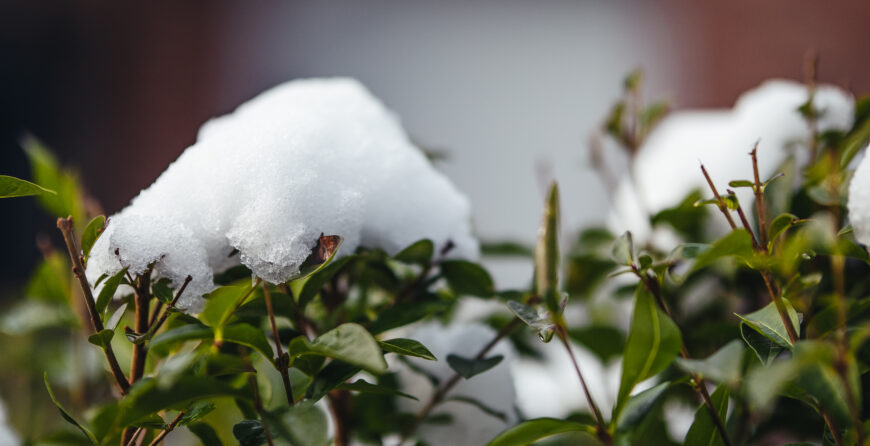
Keeping the Green Alive: Caring for Your Lawn During Winter
For many Canadian homeowners, the first dusting of snow signals the end of yard work. We retreat indoors, trade lawnmowers for snowblowers, and assume the grass is simply “sleeping.” However, the Canadian winter, with its extreme temperature fluctuations, heavy ice accumulation, and hungry rodents, is actually the most taxing season for your turf.
Proper winter lawn care isn’t just about what you do in January; it’s a strategic combination of fall preparation, mid-winter monitoring, and early spring vigilance.
Here is how to ensure your lawn survives the Great White North and emerges lush and healthy.
The Mid-Winter Do's and Don'ts For Your Lawn
Once the snow is knee-deep, your lawn enters dormancy. However, it is still a living organism.
Avoid Heavy Foot Traffic
When grass is frozen, the internal cells are brittle. Walking over a frozen lawn can actually shatter the grass blades and compress the soil underneath. You might not see the damage now, but come May, you’ll see brown, dead footprints where the grass failed to recover. Try to keep shovelled paths away from the main lawn area.
Salt Awareness
Canada’s icy winters require de-icing, but standard rock salt (Sodium Chloride) is toxic to lawns. As snow melts, the salt leaches into the soil, drawing moisture away from the roots and creating “physiological drought.”
Solution: Use calcium magnesium acetate (CMA) or sand for traction. If you must use salt, apply it sparingly and use a plastic guard to keep it on the pavement and off the grass.
Understanding Snow Mold
In many parts of Canada, snow mold is a common spring surprise. There are two types: Pink Snow Mold and Gray Snow Mold.
These fungi thrive when there is a long period of snow cover on ground that hasn’t completely frozen, or when there is a heavy snowmelt.
Prevention: Avoid creating massive “snow mountains” on your lawn when shoveling your driveway. These piles take much longer to melt in the spring, keeping the grass underneath damp and dark for weeks longer than the rest of the yard, which invites mold.
Late Winter to Early Spring Transition
As the days get longer in March, the temptation to “help” the lawn is strong. However, patience is key.
Avoid Raking Too Early
Raking a soggy, half-frozen lawn can pull healthy grass right out of the mud. Wait until the soil is firm and the grass is no longer “squishy” to the touch.
Drainage Check
Watch where the water pools during the first big thaw. If you see standing water, it means you have drainage issues or “ice encasement.” Ice encasement is when a layer of ice forms directly on the grass for more than 50 days, potentially suffocating it. If you see thick ice sheets forming, you can carefully poke small holes in the ice to allow some gas exchange.
A Canadian winter is a test of endurance for your landscape. While the grass may look dead under that layer of white, it is actually in a state of suspended animation, relying on the protection you offer throughout the cold months. With the tips above, you are ensuring your lawn doesn’t just survive the winter, it will also thrive in spring.
If you want to make sure your lawn is cared for all year round with sprinkler systems that can be easily turned off during the winter months, Water Your World provides sprinkler system installations in the Greater Toronto area. Contact us at +1 905 – 689 – 6168.
We serve the areas of Brantford, Toronto, Oakville, Niagara, Mississauga, Burlington, Hamilton, Flamboro, Guelph and other surrounding areas.
